I will name this first section
More Rework
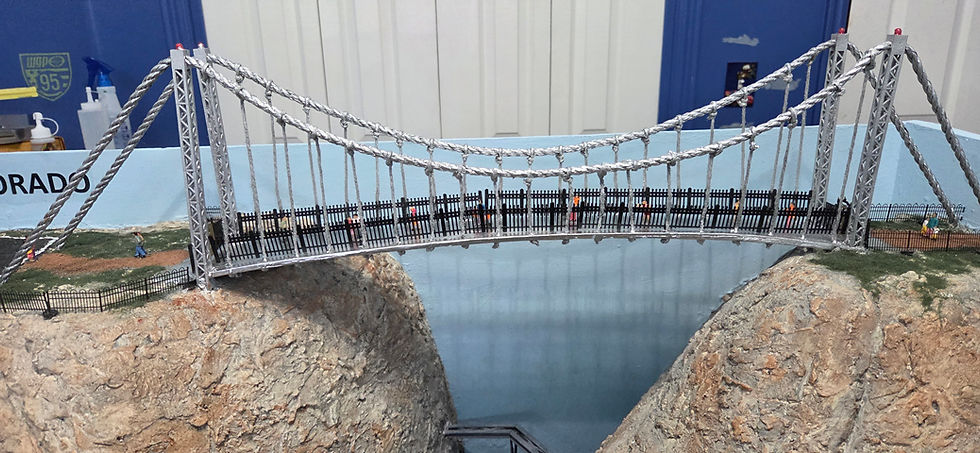
After some wild ideas and trial and error, I came up with my first version of the suspension bridge. No, I am not done, I am pursuing a method of building the bridge with steel cables. Wish me luck!

This first picture looks promising, but unfortunately the 3D printed tower posts for the suspension bridge were too short to anchor into the mountains.
The base was made with two thin balsawood planks glued together with a piece of cloth in-between the planks. This made it stronger and helped the base maintain the arch shape.

The second picture shows the brown string I cut back out of the base because the string was just too fuzzy.

This last picture shows the white replacement string held in place as the glue dries in the base.
Challenge Number ??? - forget it, I lost count. How am I going to shape that 1/4" string for the main cable?
The new beams for the end towers were received and glued in place
Wild idea # 83,251: How do I shape the ¼” rope used for the main cable? I painted one side of a balsawood plank and then sprayed it with Pam cooking oil (hoping the glue wouldn’t stick). I placed the oiled balsawood plank onto the main cables after working two coats of wet Elmer’s glue into the rope. – IT WORKED!
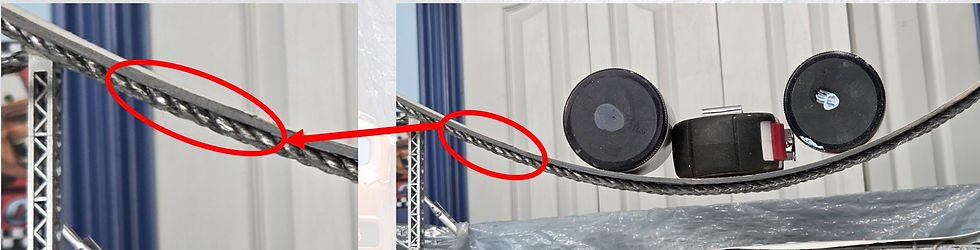
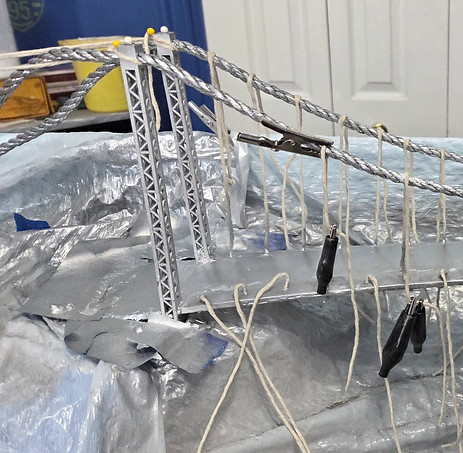
With each pass I glued every other suspension cable to the main cable with a drop of glue to hold it in place. I sprayed each drop of glue with alcohol to help the glue seep into the rope.
Using one or two alligator clips on each string seemed to be sufficient to hold the suspension cable straight while the drop of glue dried.
Yellow round head sewing pins were used first to keep the remaining rope from being pulled into the center. Then #56 holes were drilled, and the white sewing pins were glued into the tower as a permanent means of anchoring the rope in the tower.
And yes, after I was happy with the placement of the tension cables, I tied the tension cables at the top and glued the string around the rope.

Green Cloth Apron: I used Hobby Lobby Duffle Bag Green
Not in the Standard

The Sky-Blue paint I used was in the Home Depot BEHR sample size container, with the paint code shown in the picture. The BEHR paint card is BS5-2, color = Drip, ID = S460-2.
Note: This color was slightly darker than the BEHR paint named Sky Blue. The sky in the railroad yard module was in-between the two colors, but seemed closer to the color named Drip.


Enhanced Wiring Diagram
I color coded the wiring diagram to make it easier for me to wire the module.
I am old school. I saw too many bad electrical connections during my career. Along with crimping, I soldered the wire in every wire terminal.


The diorama pictures below can be viewed in a larger format by selecting larger pictures.
Are You Ready?


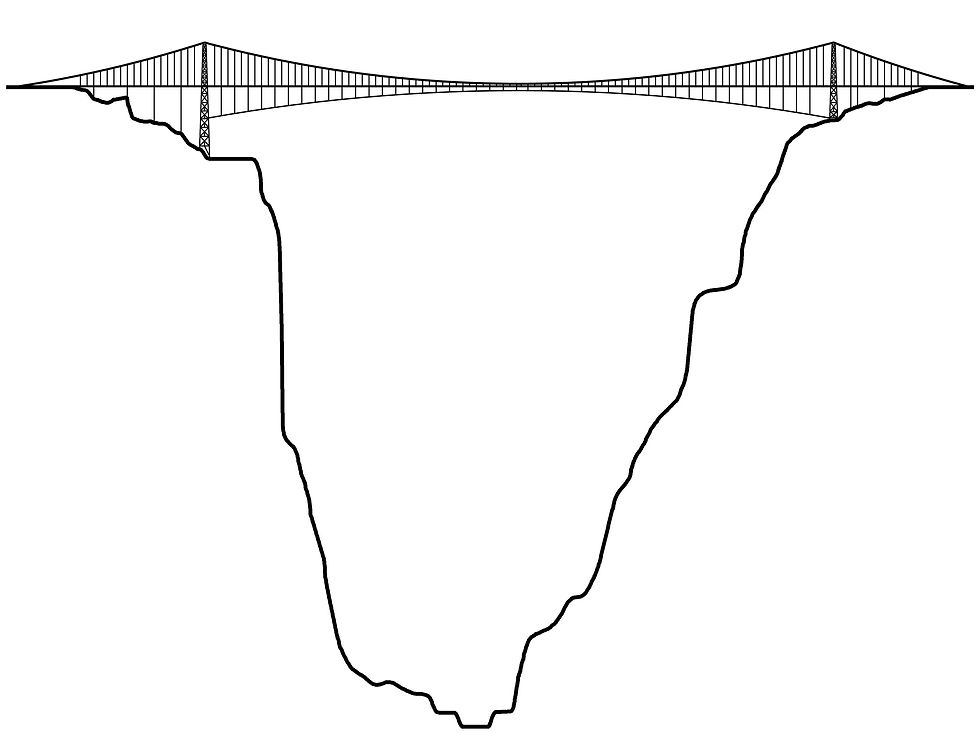
Royal Gorge outline drawing